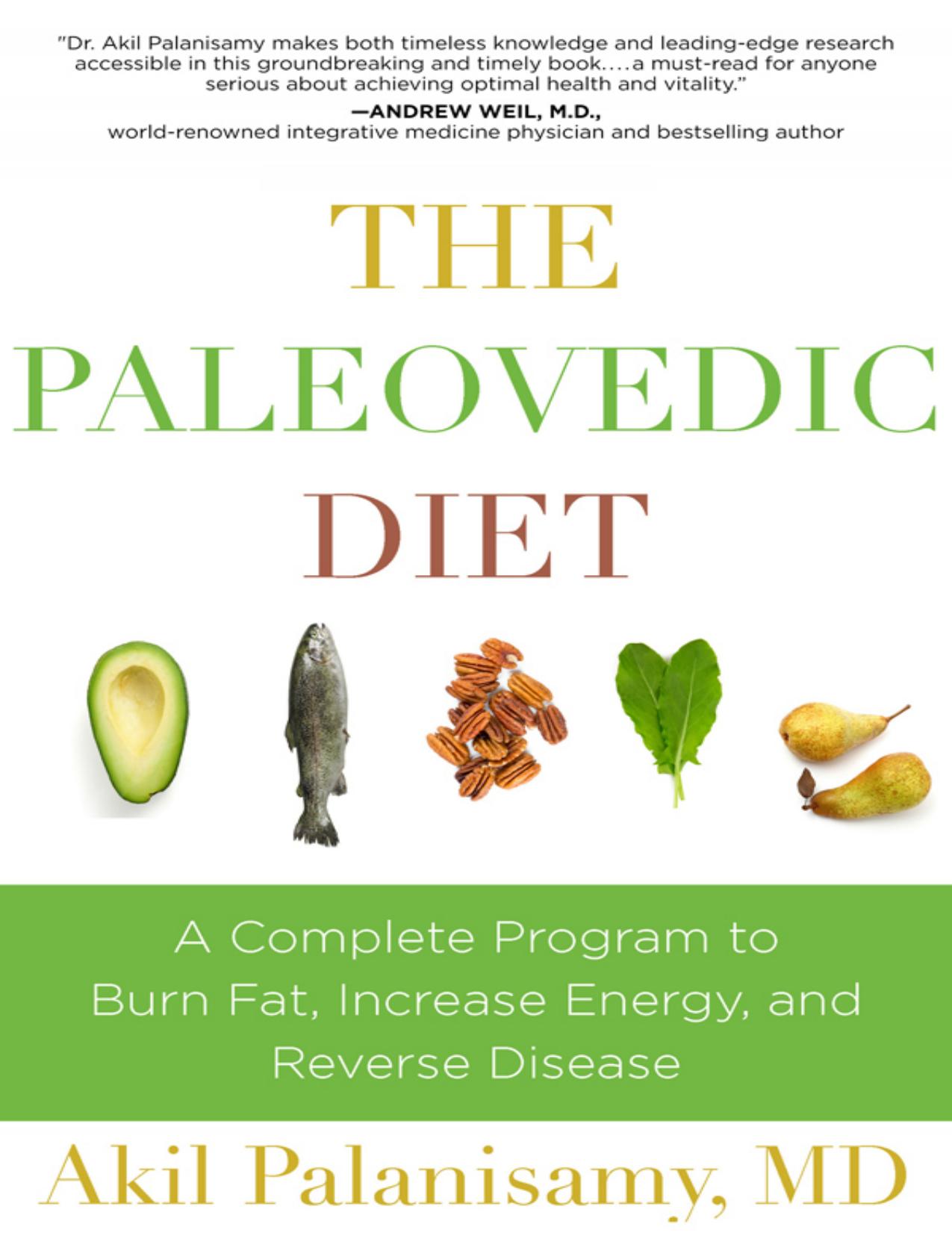
The Paleovedic Diet by Akil Palanisamy
Author:Akil Palanisamy
Language: eng
Format: epub, pdf
Publisher: Skyhorse Publishing
Published: 2014-12-18T05:00:00+00:00
PART TWO
Exercise, Sleep, and the Mind-Body-Spirit Balance
CHAPTER 8
YOUR DAILY ROUTINE—AYURVEDIC TIPS AND INTERMITTENT FASTING
In this chapter, I discuss a dinacharya, or daily routine, based on the principles of Ayurvedic medicine. Dinacharya is important to help balance your body, regulate your natural circadian rhythm, and maintain healthy digestion. It is a ritual that provides a sense of grounding and everyday routine that can be very balancing for both body and mind. In our modern society, the power of ritual is often not utilized, and this is a simple way that you can start to incorporate basic rituals into your daily life.
The dinacharya is individualized according to your specific body type, which was determined in Chapter 2. The basic routine is listed here in sequence and explained in more detail below. Common elements for all body types include the following:
• Wake up as early as you comfortably can, preferably without an alarm clock. You should feel well rested when you arise, so go to bed earlier if you require more sleep.
• Have a tall glass of hot water with a little bit of lemon or lime juice first thing in the morning after you wake up. This is a simple beverage that strengthens your digestive fire and helps promote healthy elimination. It’s best to have this drink first thing when you wake up.
• Practice oil-pulling, a technique that supports oral hygiene and detoxification.
• This should be followed by brushing your teeth and scraping your tongue, preferably with a tongue scraper, which is a U-shaped wooden or metal tool. The main benefit of tongue scraping in Ayurveda is not hygiene or cleanliness but rather stimulation of your digestive organs. The tongue is considered a microcosm of your entire body, and scraping the tongue from back to front stimulates and awakens all your organs, especially your digestive organs.
• Next, perform nasal irrigation with a neti pot and incorporate nasya; these are traditional methods to purify and revitalize the breathing passages, reduce allergies, and decrease your chances of contracting upper respiratory infections.
• Some type of reflective or contemplative practice, even for just a few minutes, is encouraged. This could include setting some goals for the day, journaling, visualization, or a mind-body practice such as yoga, meditation, or deep breathing. This helps set the tone for the day and puts your mind in a good space as you start your morning.
• At least once a week when you have additional time (perhaps on a weekend), perform a simple Ayurvedic self-massage known as abhyanga.
• Have a shower or bath to conclude your routine.
Oil-pulling
Oil-pulling is an ancient Ayurvedic therapy that involves holding oil in the mouth for about ten minutes and then discarding it. In Ayurveda, oil-pulling has been used to strengthen the teeth, gums, and jaws and to prevent tooth decay, gum disease, and bad breath. It is believed that oil-pulling removes toxins from the body and stimulates Agni, or digestive fire.
The practice is usually done with either sesame or coconut oil. Basically one takes about a teaspoon of oil into the mouth and swishes and “pulls” the oil around through one’s teeth.
Download
This site does not store any files on its server. We only index and link to content provided by other sites. Please contact the content providers to delete copyright contents if any and email us, we'll remove relevant links or contents immediately.
The Bone Broth Miracle: How an Ancient Remedy Can Improve Health, Fight Aging, and Boost Beauty by Ariane Resnick(16595)
How to Be a Bawse: A Guide to Conquering Life by Lilly Singh(7464)
The Fat Loss Plan by Joe Wicks(4902)
The Ultimate Bodybuilding Cookbook by Kendall Lou Schmidt(3927)
The French Women Don't Get Fat Cookbook by Mireille Guiliano(3650)
A Jewish Baker's Pastry Secrets: Recipes from a New York Baking Legend for Strudel, Stollen, Danishes, Puff Pastry, and More by George Greenstein(3585)
Better Homes and Gardens New Cookbook by Better Homes & Gardens(3579)
Super Food Family Classics by Jamie Oliver(3398)
Dinner in an Instant by Melissa Clark(3153)
Bread Revolution by Peter Reinhart(3122)
Tom Kerridge's Dopamine Diet: My low-carb, stay-happy way to lose weight by Kerridge Tom(3094)
Body Love by Kelly LeVeque(3053)
Ottolenghi - The Cookbook by Yotam Ottolenghi(2927)
Flavor Flours by Alice Medrich(2859)
The Fat Chance Cookbook by Robert H. Lustig(2831)
Tone Your Tummy Type by Denise Austin(2829)
Oh She Glows Every Day by Angela Liddon(2769)
LL Cool J's Platinum 360 Diet and Lifestyle by LL Cool J(2725)
The Kitchen Counter Cooking School by Kathleen Flinn(2514)
